


The First Truly Social World Cup: What Brands Can Learn from the Battle for Long-Term Fans
The 2026 FIFA World Cup will be unlike any tournament we’ve seen before.
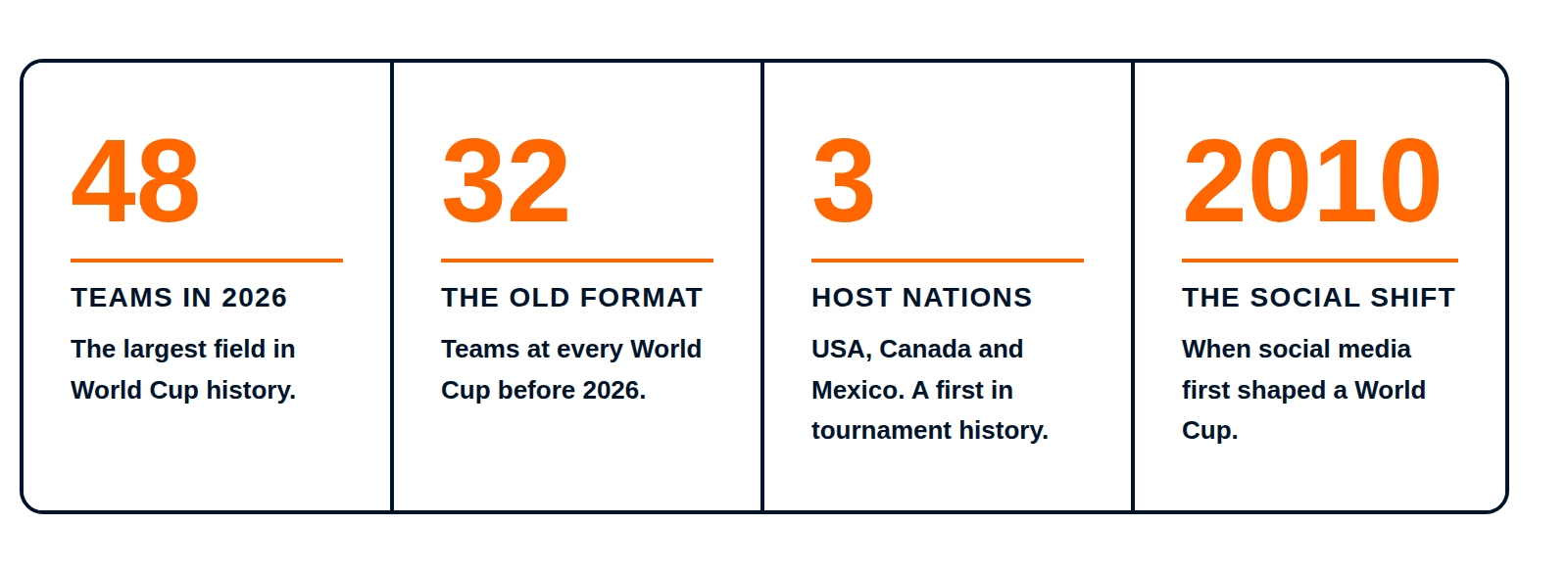
For the first time, football’s biggest competition will be hosted across three countries, the United States, Canada and Mexico. It will feature 48 teams instead of 32, creating more matches, more stories and more opportunities for emerging football nations to reach global audiences. For European fans, many games will be played at unfamiliar times, changing how audiences consume the tournament.
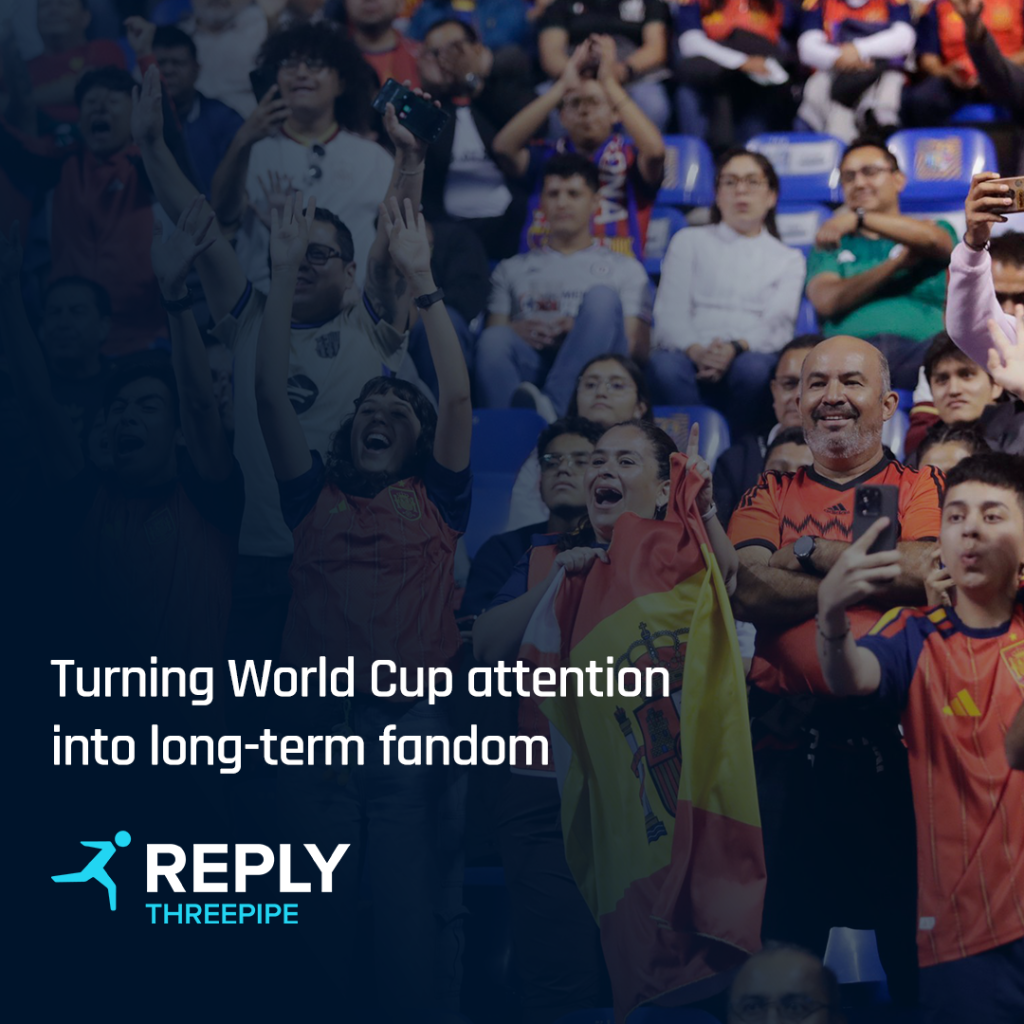
For brands, rights holders and sponsors, this creates a fundamental challenge: how do you turn unprecedented attention into long-term fandom?
While major tournaments are exceptional at generating interest, history shows that sustained growth requires far more than a few weeks of visibility.

Alongside the traditional football powerhouses, there will be new nations, new heroes and new fan communities emerging throughout the tournament. For brands, this creates opportunities to engage audiences that may previously have sat outside the mainstream football conversation.
At the same time, however, the competition for attention will be fiercer than ever.
Fans won’t simply be watching matches. They’ll be consuming highlights on social media, following creator reactions, joining fan communities, engaging with podcasts and participating in conversations across multiple platforms simultaneously.

The modern fan experience is increasingly fragmented, and that’s particularly true for younger audiences.

Every major sporting event has a defining media behaviour.
Television dominated previous generations of World Cups. Social media transformed how fans reacted to tournaments since 2010.This summer, creators are likely to play an even greater role in shaping the conversation.
For many fans, particularly younger audiences, creators have become trusted guides to sport. They provide analysis, humour, reaction and personality in ways that often feel more authentic than traditional media coverage.
The most influential World Cup content may not come from rights holders or broadcasters. It may come from fan channels, football creators, player content and community-led conversations that emerge organically throughout the tournament.
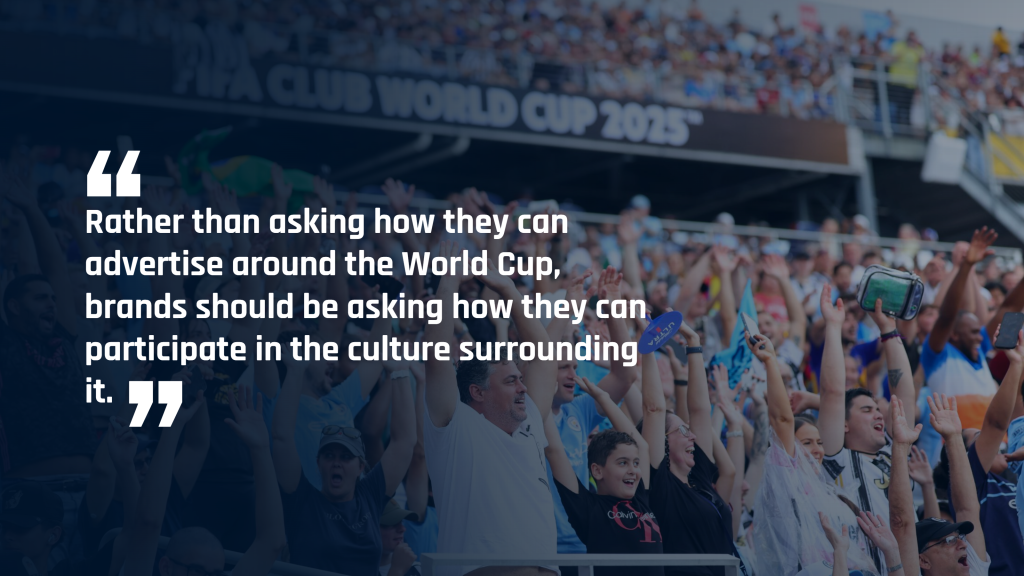
This presents a significant opportunity for brands willing to move beyond traditional campaign thinking. The difference may seem subtle, but it is increasingly what separates successful sports marketing from forgettable sponsorship.

While the World Cup will undoubtedly deliver record-breaking audiences, the most important question isn’t how many people tune in during the tournament. It’s how many remain engaged afterwards.
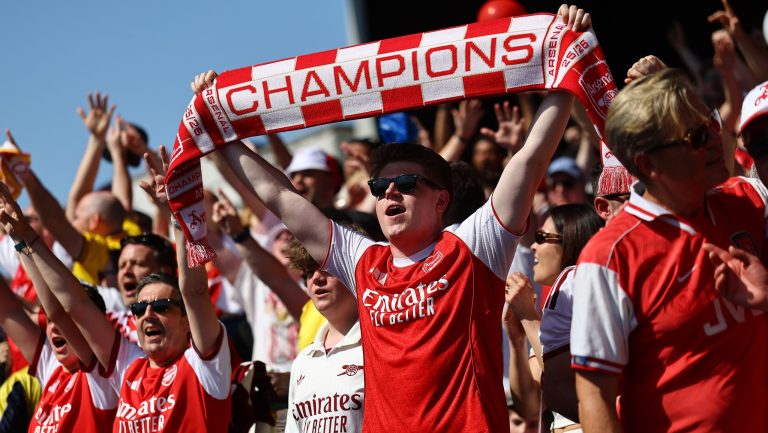
Every major sporting event creates a surge of casual interest. The challenge is converting that temporary attention into lasting fandom.

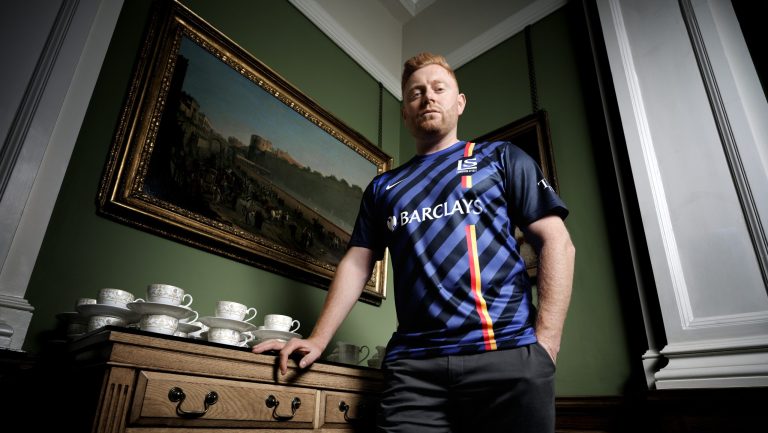
We’ve seen this challenge firsthand through our work with the Barclays Women’s Super League this season.Following the Lionesses’ success on the international stage, the WSL entered its 25/26 season launch for with a significant opportunity. Millions of people had engaged with women’s football over the summer, but many of them weren’t regular followers of the domestic game.
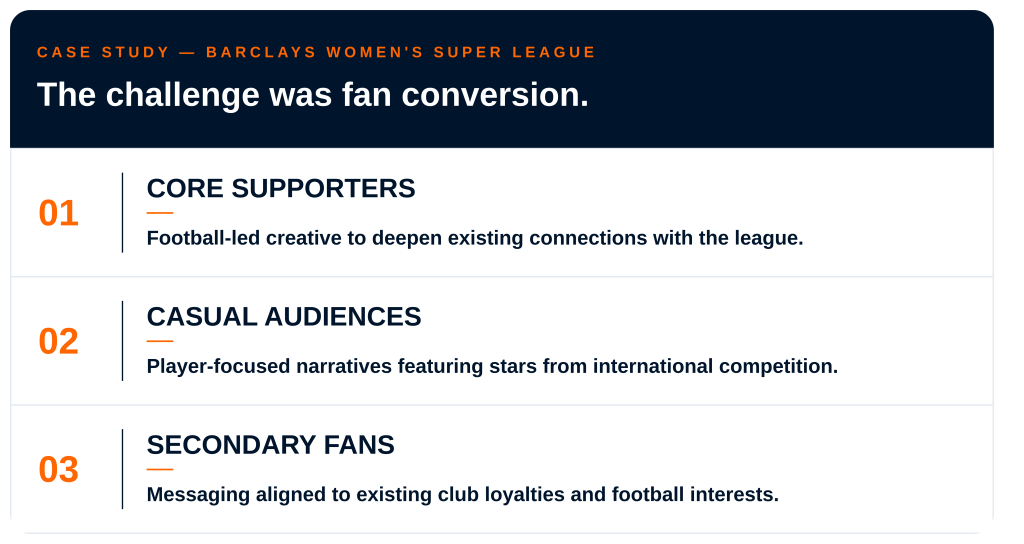
To achieve this, Threepipe Reply developed an audience strategy built around different stages of fandom. Core supporters received football-led creative designed to deepen existing connections with the league. Casual audiences were served player-focused narratives featuring stars they had come to know through international competition. Secondary fans received messaging aligned to existing club loyalties and football interests.
Alongside this, a TikTok-first creative approach helped ensure content felt native to the platforms, where younger audiences were already engaging with football culture.
The result was a campaign designed not just to generate attention, but to move people further along the fandom journey. The lesson for World Cup marketers is clear.

As the start of the to the World Cup 2026 looms, three priorities stand out.
First, they’ll focus on communities rather than mass audiences. The World Cup will be shaped by thousands of passionate fan groups, each with their own behaviours, interests and motivations.
Second, they’ll embrace creators as partners in fan engagement rather than simply channels for distribution. Creator-led storytelling will be one of the most effective ways to build credibility and relevance during the tournament
Third, they’ll think beyond the event itself. The brands that create lasting value will be those that use the World Cup as a catalyst for long-term engagement, rather than a short-term marketing moment.
The brands that succeed won’t necessarily be the ones with the biggest budgets or the most visible sponsorship assets.
They’ll be the ones that understand how fandom is formed, nurtured and sustained.